
I’ve been having a lot of conversations lately with people at crossroads — experienced professionals weighing job offers, evaluating lateral moves, or trying to decide how to structure their teams for what’s coming next.
Some of these choices are personal. Some strategic. But they all come down to one thing:
Decision-making — in complexity, under pressure, without perfect information.
It’s hard enough when it’s just us making the calls. It gets harder when we’re also setting up AI systems to start making decisions on our behalf. That’s not science fiction — that’s what agentic AI actually does. It decides.
So the quality of our own decisions — as people — matters even more.
That’s where decision science comes in.
Decision science is an interdisciplinary field that blends psychology, economics, data analytics, and behavioural science to understand how people make decisions — and how they should.
It moves us from gut-based instincts to evidence-backed, outcome-driven choices, without removing the humanity from the process. In fact, it’s the science of smartly blending logic with emotion.
As Nobel laureate Daniel Kahneman showed in Thinking, Fast and Slow (2011), humans operate using two systems of thinking: System 1 (fast, intuitive, emotional) and System 2 (slow, deliberate, rational). Decision science helps leaders know when to slow down and activate the right system — especially under pressure.
Decision science doesn’t just name these traps — it offers mental models and frameworks to avoid them. For example, Snowden and Boone’s Cynefin Framework (HBR, 2007) helps leaders classify the context of a decision — complex, complicated, chaotic, or clear — and apply the right type of response
At its heart, decision science isn’t about becoming robotic. It’s about making better decisions in human systems.
It asks:
Psychologist Antonio Damasio’s work on emotion and reasoning (Descartes’ Error, 1994) showed that emotion is essential for judgment, not a barrier to it. Leaders who suppress emotion in the name of “rationality” may actually make worse decisions.
And self-awareness — The underrated foundation of all decision-making — is rare. Organizational psychologist Tasha Eurich found that while 95% of people think they’re self-aware, only 10–15% actually are (Insight, 2017). Without self-awareness, we don’t just misjudge others — we misread ourselves.
self-awareness — The underrated foundation of all decision-making — is rare. Organizational psychologist Tasha Eurich found that while 95% of people think they’re self-aware, only 10–15% actually are (Insight, 2017). Without self-awareness, we don’t just misjudge others — we misread ourselves.
If you’re leading in complexity — whether it’s a startup, social enterprise, or corporate transformation — then decision science is not a luxury. It’s a competitive advantage.
In fact, McKinsey calls decision effectiveness “the next source of sustainable advantage.”2 And Deloitte’s research on behavioral strategy emphasizes that decision-making is now a board-level concern, not just an operational one.
And the best part? You don’t need a PhD to apply it. You just need the curiosity to ask better questions, the humility to test your thinking, and the willingness to lead with clarity over certainty.
McKinsey calls decision effectiveness “the next source of sustainable advantage.”2 And Deloitte’s research on behavioral strategy emphasizes that decision-making is now a board-level concern, not just an operational one.
Decisions are the currency of leadership.
Make them consciously. Make them wisely. And know that every decision you make is also making you.
Reference Summary
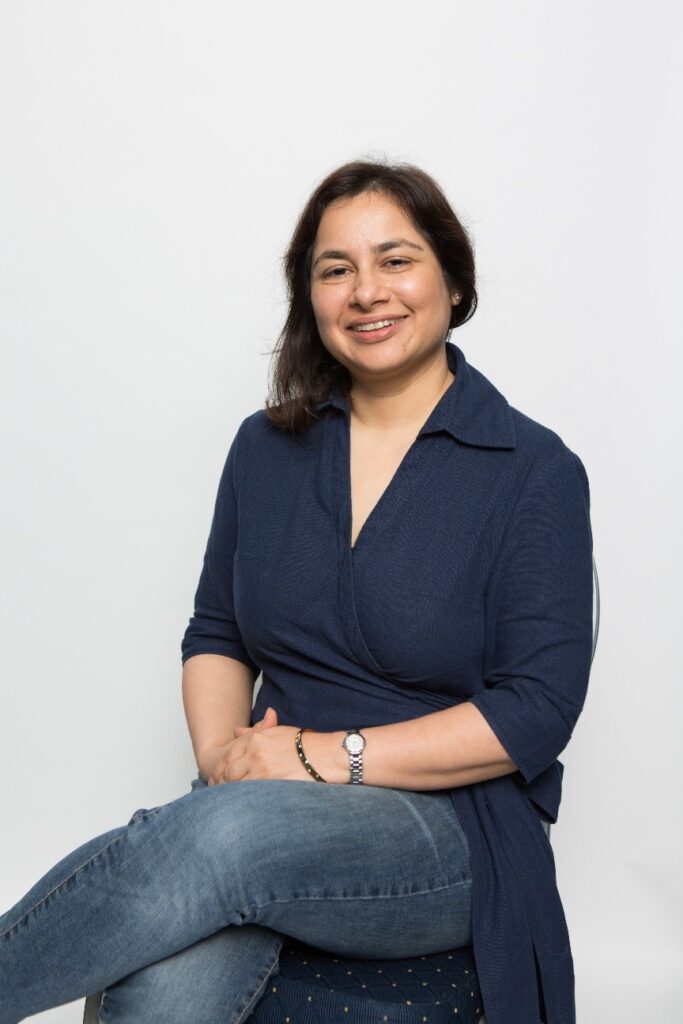
Anu D’Souza
Anu D’Souza runs Bricoleur Consulting, a leadership coaching and recruitment company focused on the digital and technology industries. A thought leader on innovation, transformation and leadership, Anu has spent many years with companies like Unilever, Ogilvy and BBDO and has lived and worked in multiple cultures. Anu is also the author of ALIGNED Why CEOs need Company Brand Alignment in the Age of a Questioning Workforce. You can reach her on anu@bricoleurconsulting.com or book a call here.